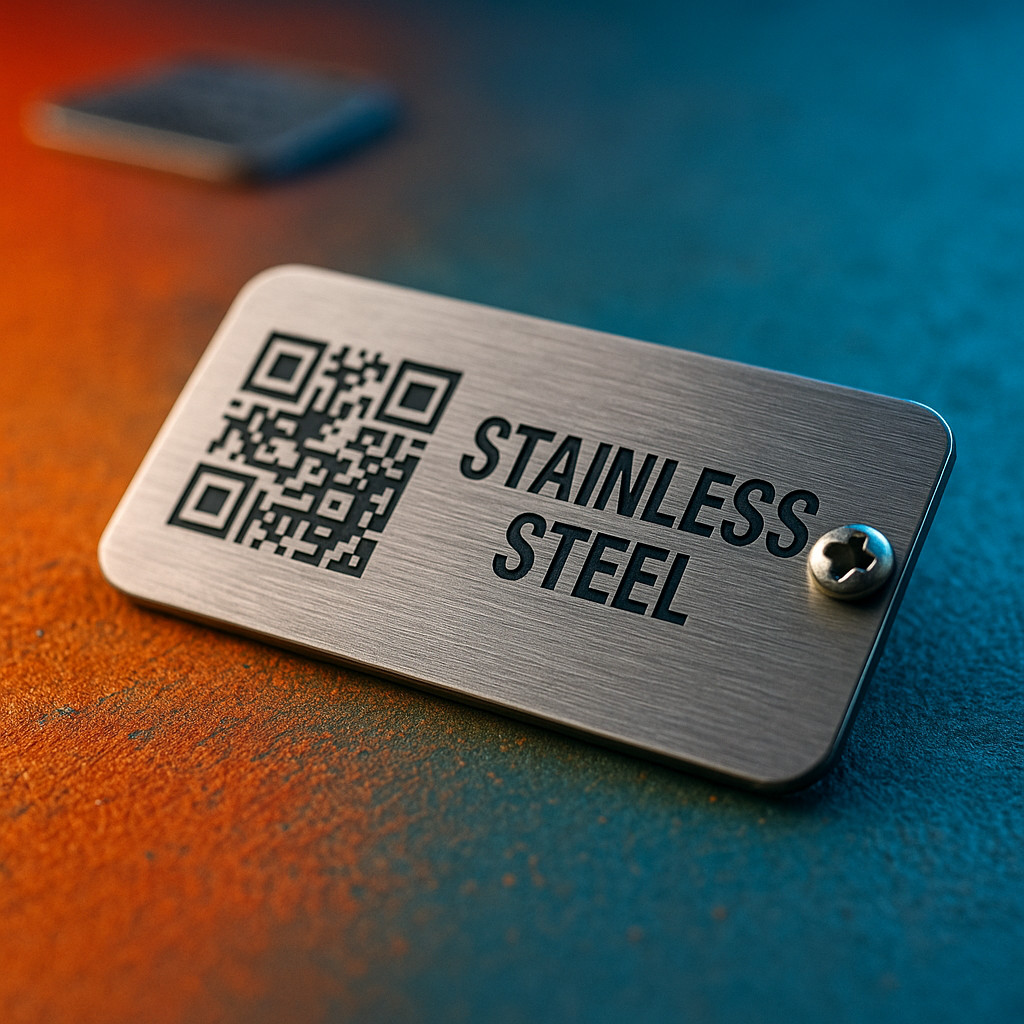
Stainless Steel QR Code Tags
SS304 and SS316 QR code tags for industrial assets, equipment, cylinders and outdoor identification. A strong general-purpose option where durability and corrosion resistance are important.
Available with QR codes, 1D barcodes, Data Matrix codes, serial numbers and customized variable identification data.
View Stainless Steel Tags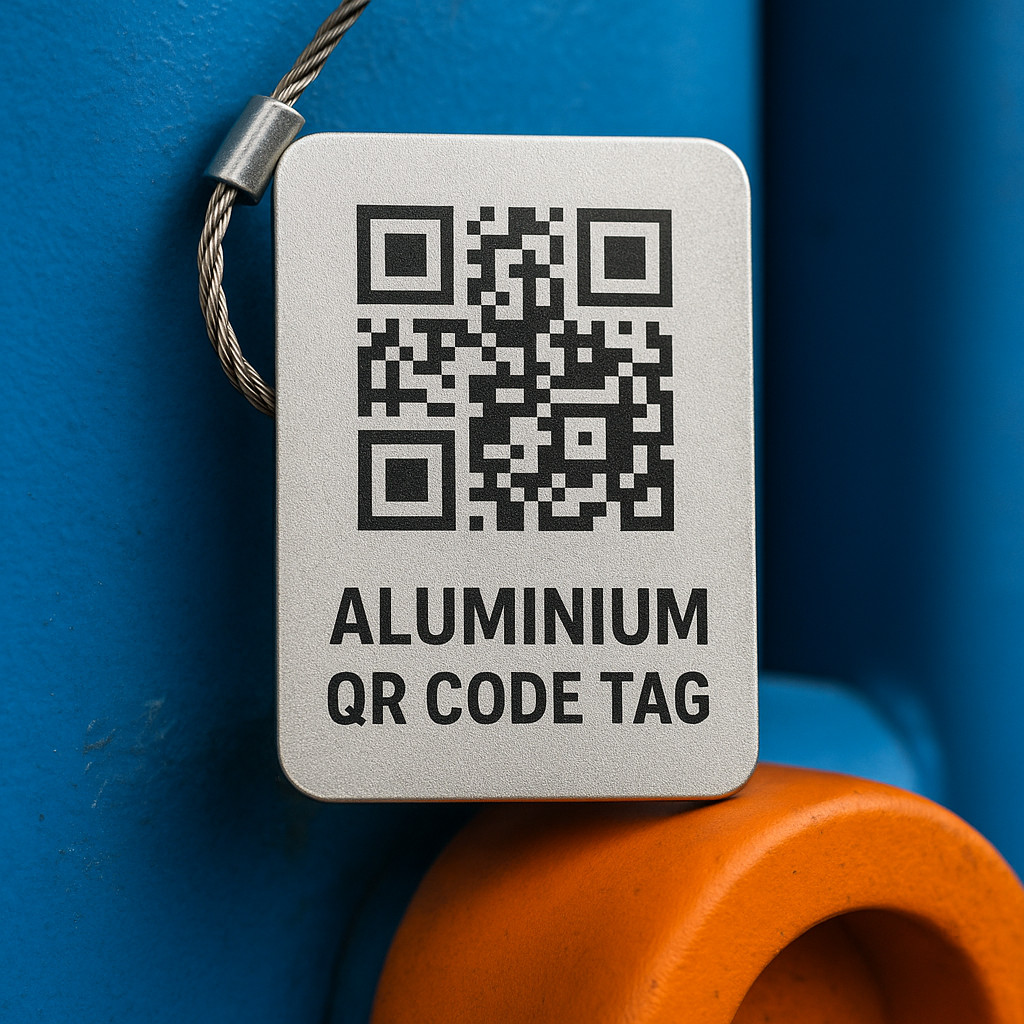
Aluminium QR Code Tags
Lightweight anodized aluminium QR code tags for panels, meters, cabinets, OEM equipment, inventory and field assets. Aluminium is also commonly spelled aluminum.
Suitable for QR code, barcode, Data Matrix and serial-number marking where low weight and compact identification are useful.
View Aluminium Tags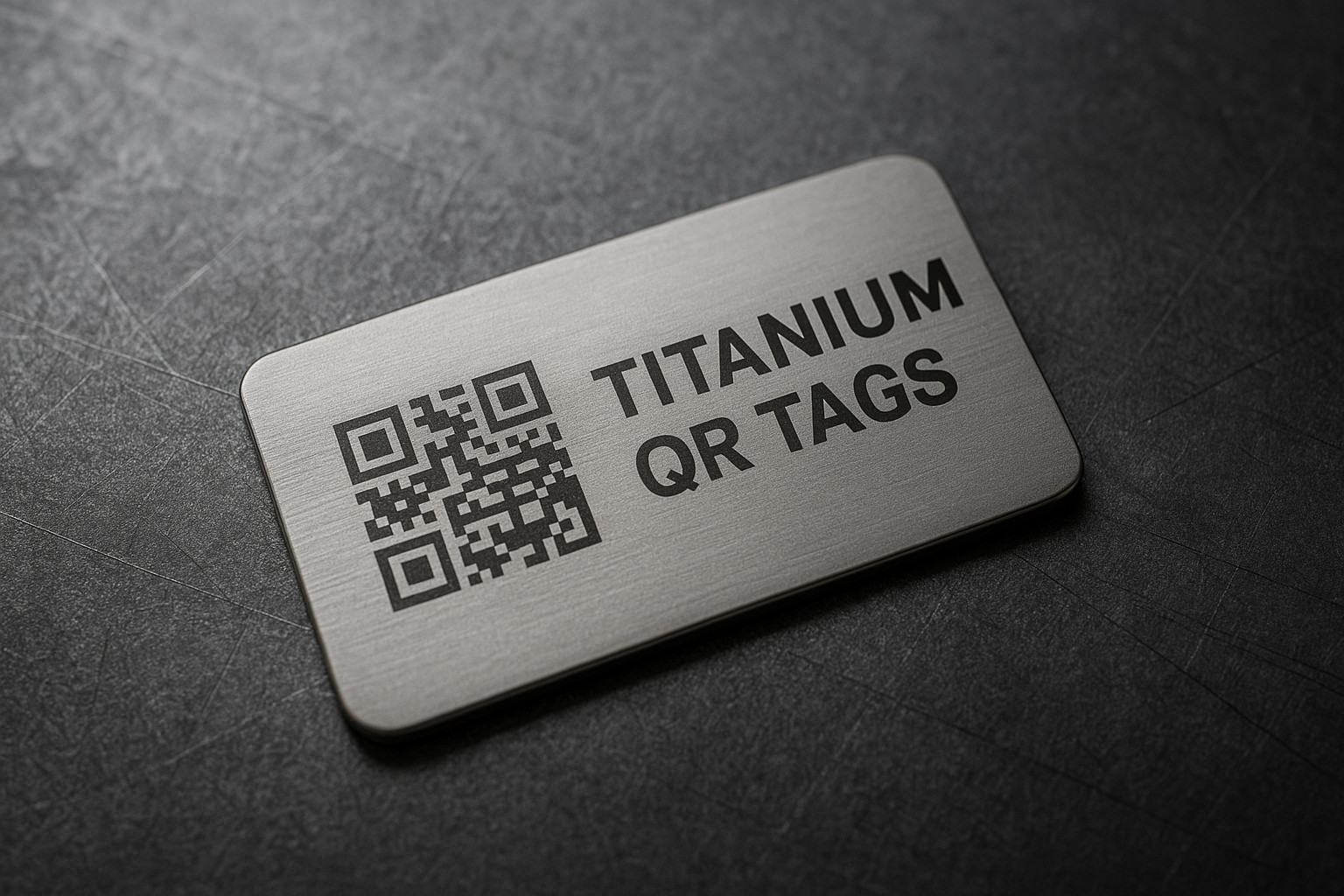
Titanium QR Code Tags
Titanium Grade 2 and Grade 5 QR code tags for demanding industrial applications where low weight, corrosion resistance or other material-specific properties are required.
For elevated-temperature or thermal-cycle applications, the complete tag and mounting system should be validated under actual process conditions.
View Titanium TagsHow to Choose the Right Metal QR Code Tag
| Material | Typical Advantage | Common Applications |
|---|---|---|
| Stainless Steel | Durable general-purpose industrial material with good corrosion resistance | Machinery, cylinders, outdoor assets, industrial equipment |
| Aluminium | Lightweight and suitable for compact identification | Panels, meters, cabinets, OEM equipment, logistics |
| Titanium | Low weight, corrosion resistance and specialized material properties | Process equipment, aerospace, laboratory and specialized applications |
Not sure which material fits your application? Send us your operating conditions, required tag size, mounting method and expected quantity.